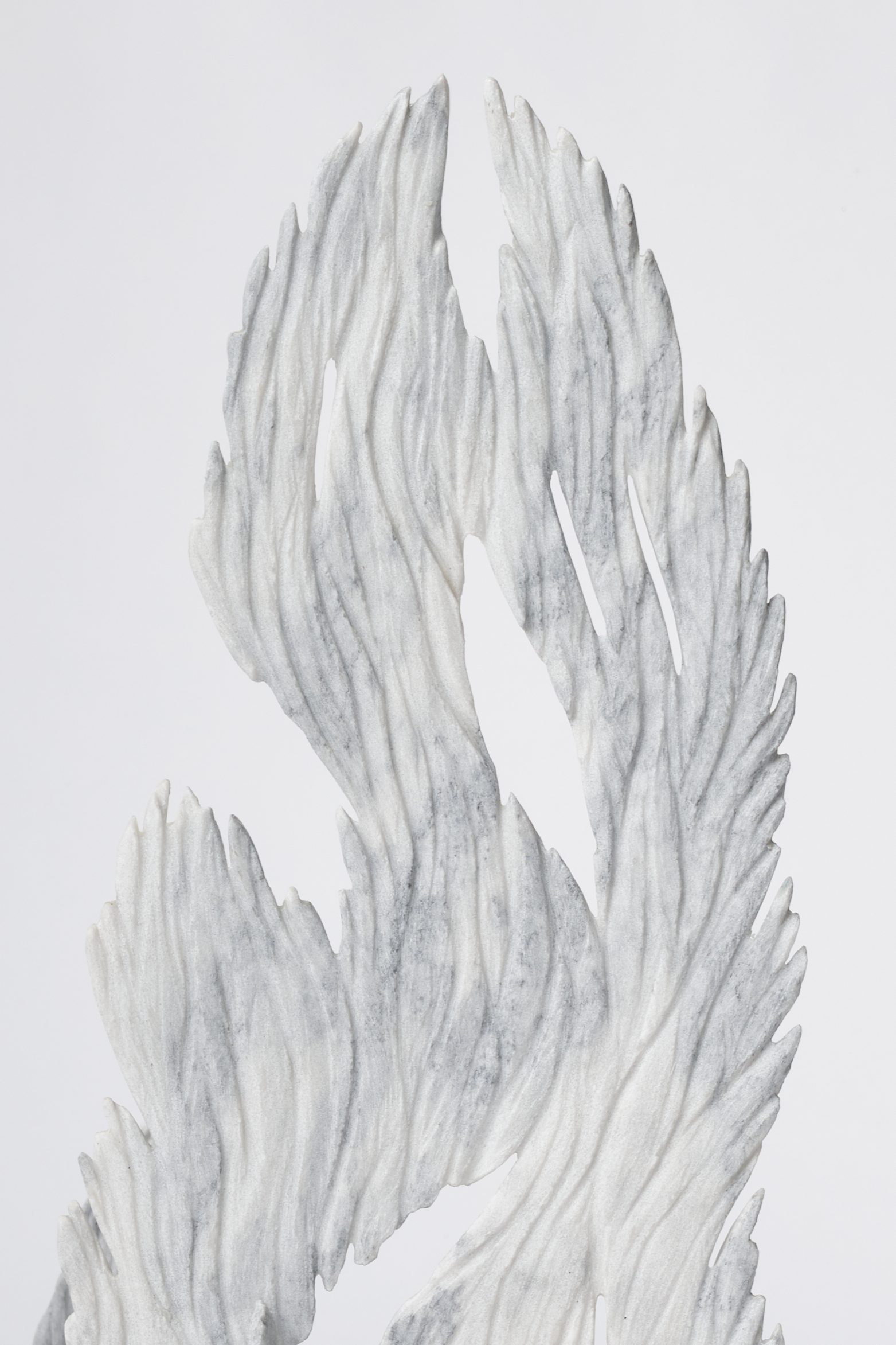
The Lick of the Flame (2025)
Composed of interlocking marble panels, this body of work forms part of a larger series that explores themes of rapture, intervention, and otherworldly communication.
These pieces are inspired by rangeomorphs, ancient hybrid plant-animal organisms from the Ediacaran Period (635–541 million years ago), characterised by fractal branching patterns in which each sub-unit mimics the shape of the entire organism. My sculptures echo this logic, with serrated, flame-like edges giving volume and structure through their repetition.

books for lovers: past, present, future (2024)
Forming part of the Sculpting Textual Bodies exhibition, this body of work draws on a bygone folk tradition of creating books out of stone to commemorate lost loved ones or to gift as tokens of affection.
This collection of hand-carved marble pieces explores different stages and manifestations of the book, ranging from the unused and unopened to the worn and loved.
Invasion (2019)
Invasion: an act of breaching some geographical, bodily, or psychological barrier. To invade is a drive humans share with other species, such as plants, animals, bacteria, and viruses.
Meanwhile, the tools used for monitoring forms of invasion are entangled with our perception of self: how we look into and out of our own bodies to comprehend things that we consider far away or deep inside. This exhibition was interested in how humans have come to imagine our relation to these bewildering environments.

 Ernst van der Wal